
The Praise to the Twenty-One Taras honors Tara, a female bodhisattva who vowed to remain in female form until all beings reach enlightenment —offering swift compassionate action in times of crisis.
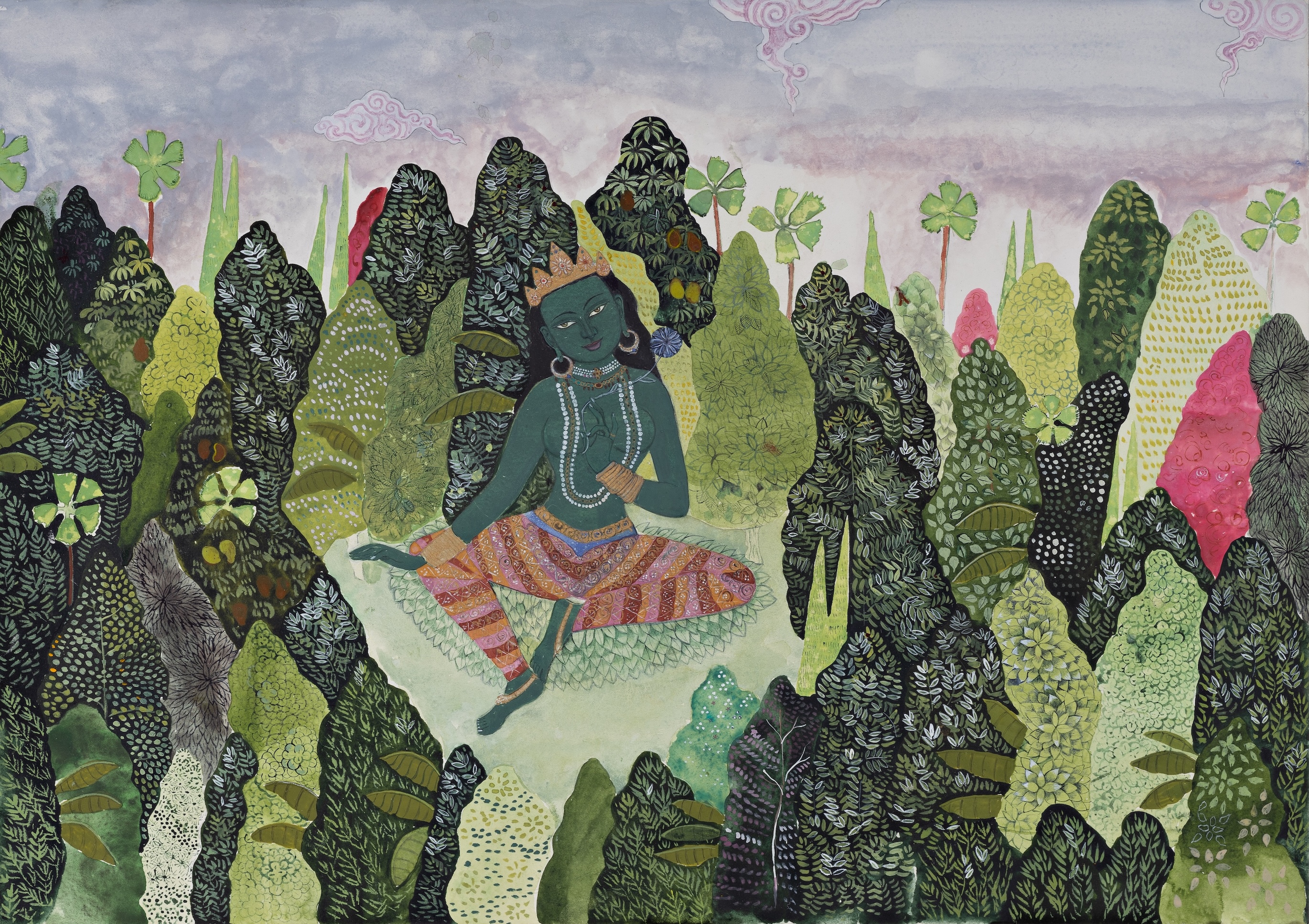
Green Tara painting by Yoshiko Crow.
What do ancient Buddhist sūtras have to say about wellbeing today? In this six-part short video series, we explore selected sūtras and the practical insights they offer for navigating modern life. Through brief, accessible reflections, each episode highlights how the Buddha’s words can support clarity, balance, and inner resilience.
In this video, Sangseraima Ujeed introduces the translation of a prominent Buddhist prayer dedicated to Tara, a female bodhisattva known for her extraordinary compassion and swift action. Emerging from the tears of Avalokiteshvara, Tara represents a powerful force for liberation who uniquely vowed to remain in female form until all beings reach enlightenment. The text highlights her Green and White manifestations, specifically noting that her green form symbolizes a synthesis of diverse spiritual activities and a readiness to intervene in times of global crisis. As a highly popular practice within the Tibetan tradition, the Praise to the Twenty-One Taras is utilized by both monastics and laypeople to navigate instability and disease. Ultimately, the source encourages practitioners to engage with these verses to achieve rapid results in their spiritual development and the alleviation of suffering.

Sangseraima Ujeed is Assistant Professor of Tibetan Buddhism at the University of Michigan, researching translation networks and the contributions of Mongolian monk scholars in Early Modern Tibet and Mongolia.