A powerful female Buddha who vowed to remain in feminine form until all beings are free—Tara's practice offers relief and resilience during crises, ancient and contemporary.
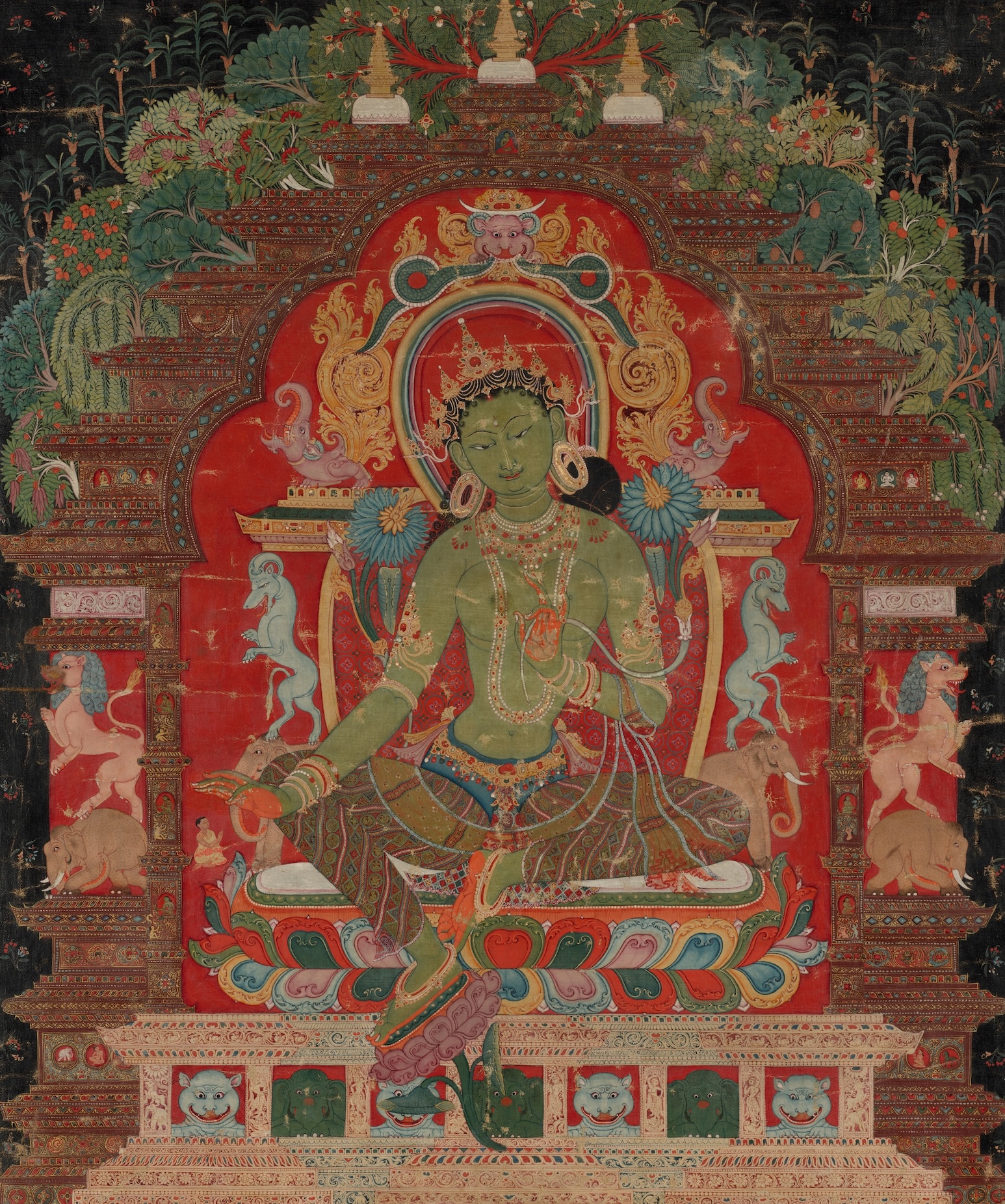
Green Tara, attributed to Aniko (Nepalese, active in Tibet mid- to late 1200s), c. 1260s, Central Tibet. Thangka: gum tempera, ink, and gold on sized cotton. Cleveland Museum of Art.
What do ancient Buddhist sūtras have to say about wellbeing today? In this six-part short video series, we explore selected sūtras and the practical insights they offer for navigating modern life. Through brief, accessible reflections, each episode highlights how the Buddha’s words can support clarity, balance, and inner resilience.
In this video, Jan Willis introduces Tara, a prominent female Buddha revered for her boundless compassion and her vow to remain in feminine form until all beings are liberated. Born from the tears of the bodhisattva Avalokiteśvara, Tara is known as a swift protector and savior, embodying deep empathy alongside the power to act decisively. This episode highlights a sūtra translated by 84000 that describes how she protects practitioners from eight great dangers, ranging from external threats such as fire and floods to inner afflictions like pride and anger. Throughout history, influential Buddhist masters have turned to Tara for guidance and protection in times of difficulty. Jan Willis suggests that invoking Tara continues to offer a powerful means of finding relief and resilience amid today’s global and social challenges.

Jan Willis is Professor of Religion Emerita at Wesleyan University, practicing and teaching Tibetan Buddhism for five decades while exploring meditation, women in Buddhism, and Buddhism's intersection with race and social justice.