
The Gold Sutra explores how the mind's awakened nature —like gold— remains pure regardless of circumstances or the shapes we take.
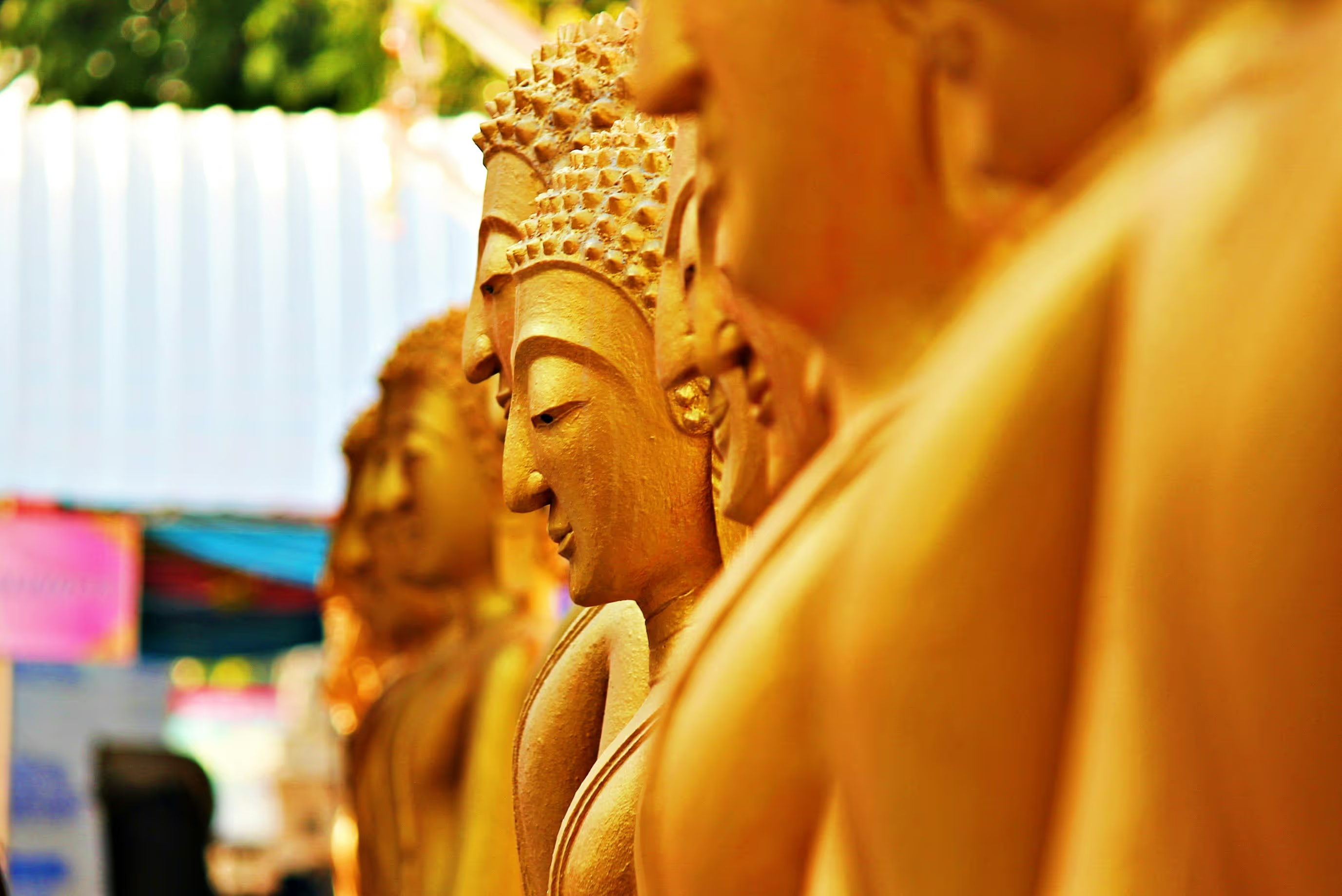
Photograph by Prasongsom Punyauppa-path.
On the sacred eve of Saga Dawa—commemorating the Buddha's birth, awakening, and Parinirvana—Dzongsar Khyentse Rinpoche offered a teaching on the Gold Sutra at Deer Park Institute. In this brief but profound text, Buddha explains to Ananda that the mind of awakening should be viewed as gold in nature: pure from the beginning, unchanged even when shaped into countless forms by a goldsmith's hands.
Rinpoche emphasizes that the mind is primordially awakened—enlightenment is not a state to be fabricated or achieved through external improvement. He observes that modern individuals often suffer from relentless self-condemnation and insecurity, constantly attempting to "enhance" themselves because they are uncomfortable with their minds and fail to recognize this innate purity. He offers a vivid metaphor: we are like lost princes who have wandered from the palace and forgotten our legitimate entitlement to the throne, becoming entangled instead in hope, fear, and dualistic anxiety.
The teaching distinguishes between two aspects: the ultimate awakened mind, which remains intact regardless of circumstances, and the relative aspect, which involves sincere longing for truth and commitment to benefiting all beings. Rinpoche advises practitioners to become familiar with the insubstantial nature of dualistic phenomena—happiness and unhappiness—while maintaining "intent on what causes the birth of wisdom." This recognition becomes vital in an age of identity crisis, where immense effort goes into creating false identities while losing touch with our fundamental, gold-like nature.
During discussion, Rinpoche references other classical metaphors for mind's nature—the sky, a jewel wrapped in rags, Indra's reflection on polished lapis lazuli. Addressing ignorance's origin, he explains that from the perspective of mind's "pure gold" nature, there is no first moment of ignorance, as time and defilement don't exist in that primordial state. The event concluded with the assembly—symbolically including humans, gods, asuras, and gandharvas—rejoicing in the teachings together.

Dzongsar Khyentse Rinpoche is a student of important Tibetan Buddhist lamas including Kyabje Dilgo Khyentse Rinpoche, Kyabje Sakya Trizin, Kyabje Dudjom Rinpoche, and the 16th Karmapa.