
The Rice Seedling Sūtra reveals dependent arising—the principle that all phenomena arise from interconnected causes and conditions—as the key to understanding suffering and finding liberation.
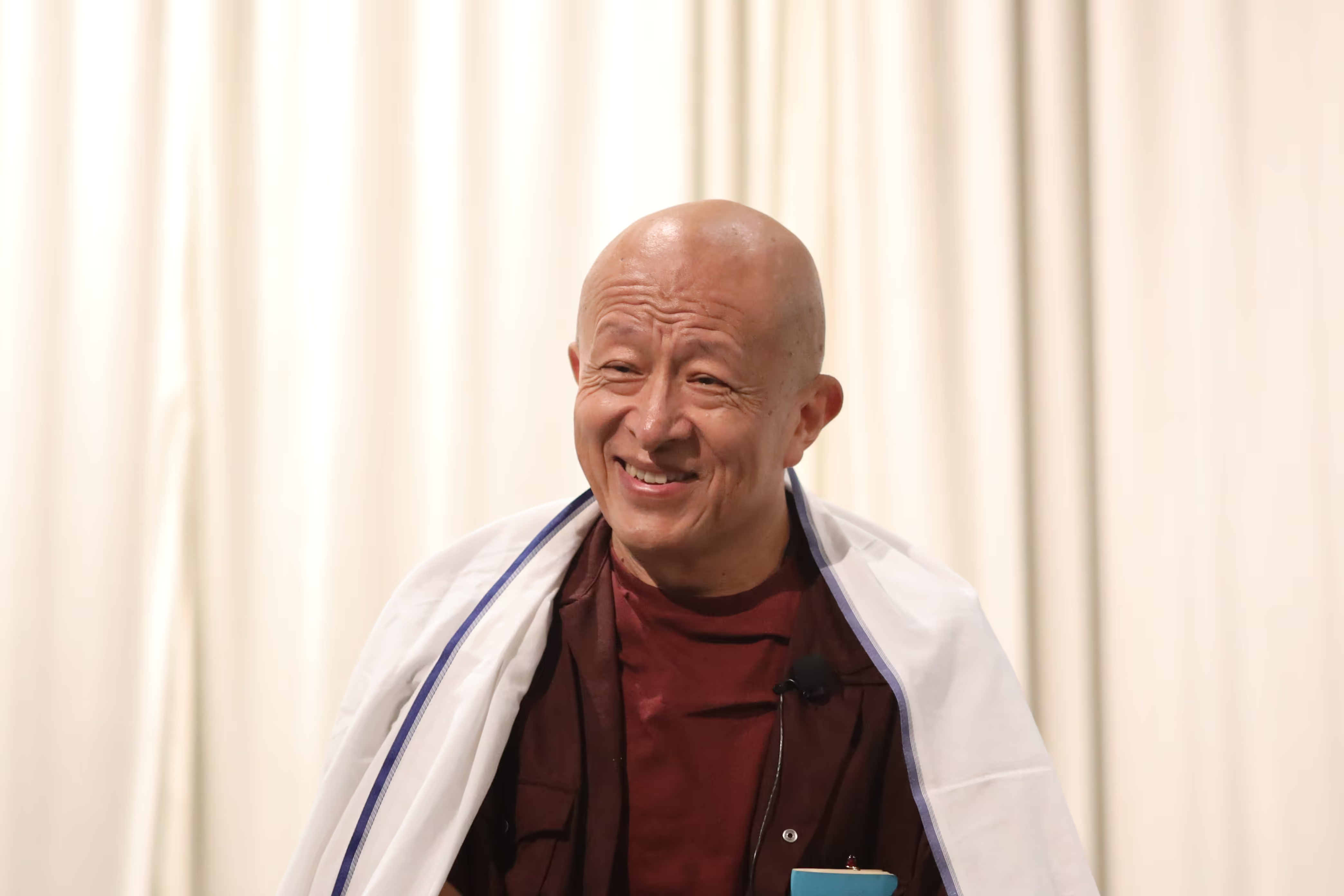
In this two-part teaching, Dzongsar Khyentse Rinpoche uses The Rice Seedling Sūtra to clarify core Buddhist principles and their relevance to contemporary life. He distinguishes Buddhism from both religion and science, explaining that while it employs rituals and shares science's methodology of falsifiability, its ultimate aim is understanding impermanence and the nature of suffering. Rinpoche introduces "Cinderella teachings"—useful metaphors or relative truths that guide practitioners toward absolute truth—and explores dependent arising through vivid examples like rainbows, rice shoots, and linen bags. By examining the twelve links of interdependent co-origination, he demonstrates how phenomena exist only through specific causes and conditions, lacking independent existence. Understanding this interconnectedness and emptiness allows practitioners to recognize suffering's roots in ignorance, "spin the wheel backwards" toward liberation, and live with non-violence, mindfulness, and humility while appreciating life's imperfections.
Dzongsar Khyentse Rinpoche explores The Rice Seedling Sūtra to define core Buddhist principles and their modern relevance. He clarifies that Buddhism's ultimate goal is understanding impermanence and suffering's nature, distinguishing it from both religious ritual and scientific inquiry. A central theme is "Cinderella teachings"—useful metaphors or relative truths guiding practitioners toward absolute truth. Through dependent arising, Rinpoche explains that all things exist only through specific causes and conditions, like a rainbow that appears visible yet lacks truly independent existence. Recognizing this interconnectedness and emptiness allows practitioners to appreciate life's imperfections and find liberation from habitual attachment.
In the second session, Dzongsar Khyentse Rinpoche examines dependent arising through everyday examples like rice shoots and linen bags, illustrating how all phenomena emerge from transitory collections of causes rather than existing independently. He explains that suffering stems from ignorance—the failure to recognize that objects are merely series of labels and conditions. By understanding the twelve links of interdependent co-origination, practitioners can "spin the wheel backwards" to achieve liberation from delusion. The teaching emphasizes truth's paradoxical nature: things simultaneously function as if real while remaining ultimately empty. Applying this wisdom to daily life fosters non-violence, mindfulness, and humility.

Dzongsar Khyentse Rinpoche is a student of important Tibetan Buddhist lamas including Kyabje Dilgo Khyentse Rinpoche, Kyabje Sakya Trizin, Kyabje Dudjom Rinpoche, and the 16th Karmapa.