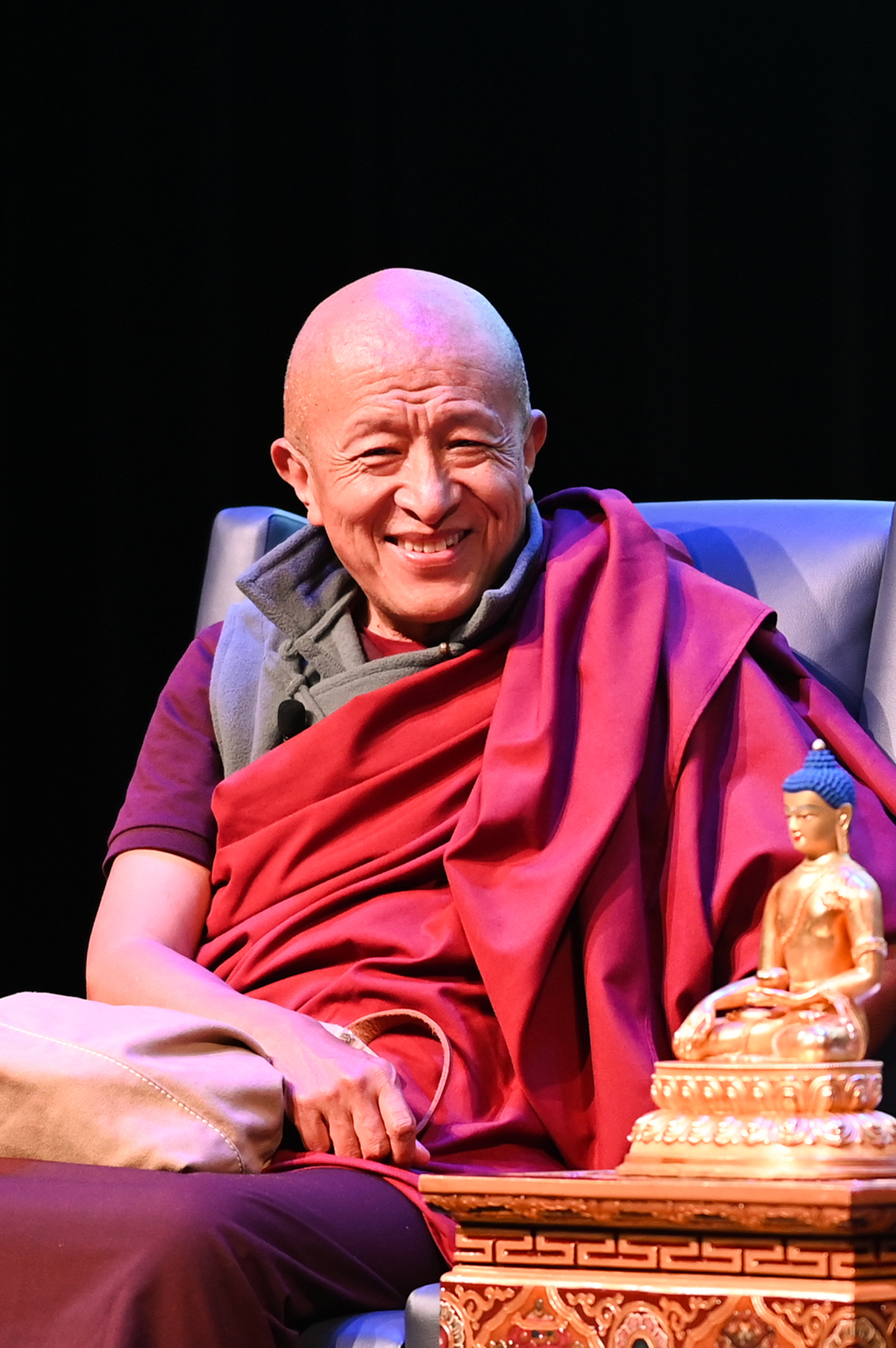
Dzongsar Khyentse Rinpoche reminds us that mindfulness doesn’t always mean switching off —it can begin with small, clever shifts.

Photo by Nicolas Lobos
Dzongsar Khyentse Rinpoche offers surprisingly practical digital wisdom: intentionally confuse the algorithms that track your behavior to break free from the narrowing echo chambers they create. Modern platforms use sophisticated tracking to reinforce habitual patterns, gradually limiting your perspective to what you've already shown interest in—creating a self-reinforcing loop that shapes both what you see and who you become. Rinpoche suggests a form of "digital mindfulness" where you actively engage with diverse, unexpected content to disrupt this data collection cycle and reclaim control over your online experience.
Drawing a clever parallel to Buddhist practices where physical adjustments—like changing posture during meditation—can trick the mind into renewed focus, Rinpoche shows how similar strategies can outwit algorithmic systems. By deliberately viewing content outside your usual patterns, you prevent technology from rigidly defining your interests and behaviors, maintaining the spaciousness and curiosity essential for genuine growth. This proactive, almost playful approach encourages a more conscious interaction with devices that permeate daily life—not necessarily by switching off entirely, but through small, clever shifts that preserve your agency and prevent your digital footprint from becoming a self-fulfilling prophecy.
This #ReelWisdom clip is from “Supporting Resilience and Mental Health in the Age of AI,” a public talk hosted by 84000 and the University of Toronto.

Dzongsar Khyentse Rinpoche is a student of important Tibetan Buddhist lamas including Kyabje Dilgo Khyentse Rinpoche, Kyabje Sakya Trizin, Kyabje Dudjom Rinpoche, and the 16th Karmapa.