The Śaṃvara cycle comprises 206 works on Cakrasaṃvara, classified as a mother tantra emphasizing wisdom. Learn about the commentaries on this cycle's tantras, liturgical works featuring the male deity, and practices centered on Vajravārāhī and Vajrayoginī (Toh 1401-1606).
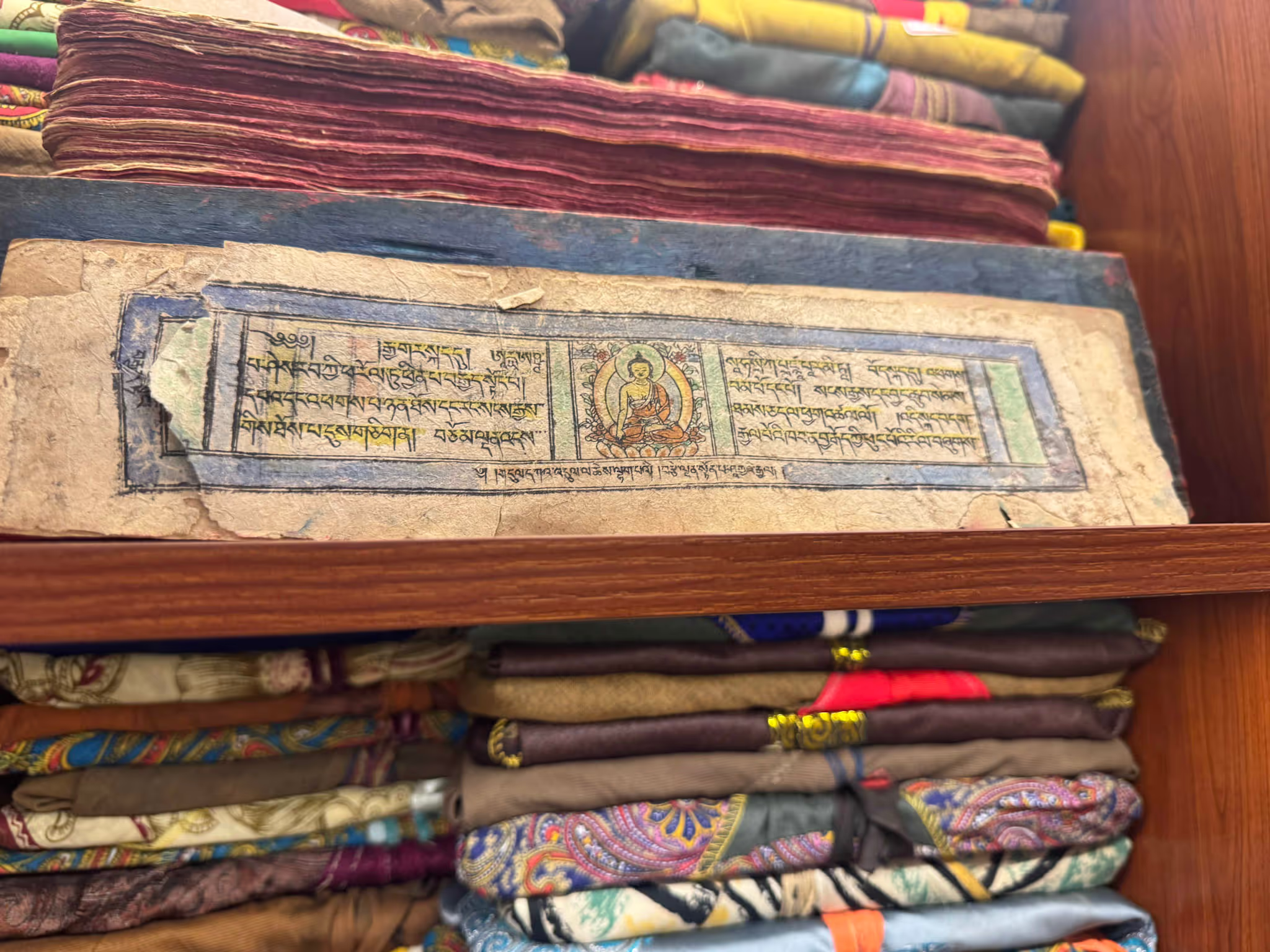
The 206 works in this subdivision (Toh 1401-1606), filling almost 9 volumes of the Degé Tengyur, are all on the cycle of tantras centered on Śaṃvara (bde mchog), also called Cakrasaṃvara (khor lo sdom pa) in many of them, and often referred to as Heruka.
While placing this group in the overall heirarchy of the four levels of tantra—that is to say, within the fourth level, Unexcelled Yoga tantra, on the second level of three (i.e. the wisdom or “mother” tantras)—the dkar chag mentions the classification used in the Laghuśaṃvara (bde mchog nyung ngu, Toh 368, the root tantra of the cycle) whereby it is seen as constituting the sixth of six levels of tantra (rgyud sde sgo drug pa) known as “ultimate secret yoga tantra” (rnal ’byor gsang mtha’i rgyud).
The first 24 works (Toh 1401-1424) are described in the dkar chag as commentaries on the tantras of the cycle.
The next 115 works (Toh 1425-1540) are mainly liturgical works in which the male deity predominates.
These are followed by 66 works (Toh 1541-1606) centered on Vajravārāhī or Vajrayoginī.
The summary for the cycle in the dkar chag gives figures of 118 and 67 works in these last two groups, respectively. This may perhaps be accounted for by the grouping of more than one work under a single title, but warrants investigation.
Dr. John Canti was a founding member of 84000’s executive committee and editorial team and is now senior editor.