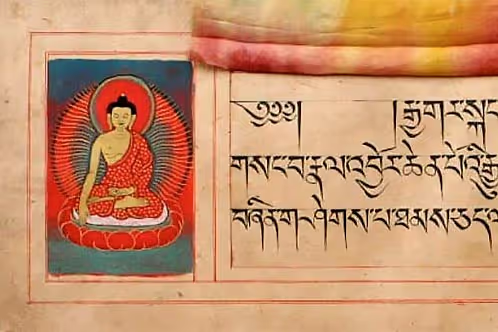
Discover the Five Protections —ancient Buddhist scriptures personified as goddesses that offer a holistic approach to health crises, blending ritual, medicine, ethics, and environmental harmony to address everything from snakebites to pandemics.
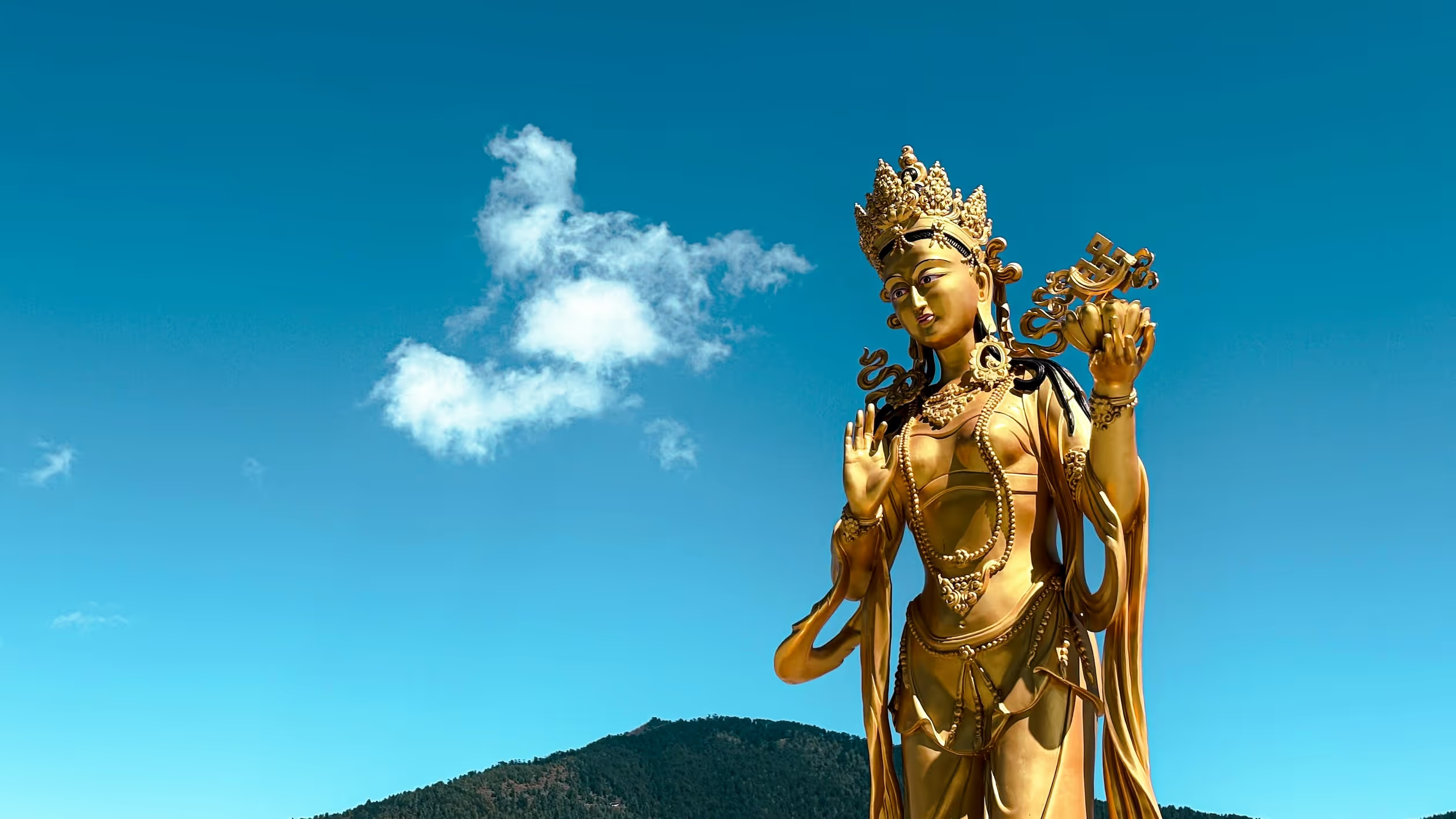
Photograph by Rama Krushna Behera, Thimphu, Bhutan.
In this episode of 84000 In Conversation, Joie Chen chats with Dr. James Gentry, Assistant Professor of Religious Studies at Stanford University, to learn more about the scriptural collection known as the Pañcarakṣā. This collection is comprised of five texts—all of which are now available in English in the 84000 Reading Room—and together James and Joie explore their history and practice across the Buddhist world, with special focus on its translation and transmission in Tibet.
This conversation explores the Five Protections, a collection of five Buddhist scriptures dating back to at least the 8th century that focus on healthcare and disaster prevention. These texts are unique in personifying the scriptures themselves as protector goddesses capable of averting specific harms including snakebites, pandemics, legal troubles, and other life-threatening dangers. The collection represents what Gentry calls a "practical canon," blending early Buddhist teachings with tantric rituals, medical prescriptions, and ethical commands to respect the environment. Rather than offering simple incantations, these texts present a holistic crisis management model that views health as an interconnected balance between human conduct, spiritual forces, and ecological harmony. The Five Protections emphasizes practical interventions including hygiene practices, ritual actions, and cultivating a compassionate relationship with the non-human world—including spirits, animals, and natural forces. Gentry explains that these scriptures remain highly influential across the Buddhist world today, bridging the gap between mundane physical well-being and ultimate spiritual goals, and demonstrating Buddhism's practical engagement with everyday suffering through a synthesis of medicine, ritual, ethics, and environmental stewardship.
Key Moments:
[2:50] What is the Pañcarakṣā (the Five Protections)? What are they about and what do they contain? Why are these texts grouped together as a set of five?
[7:24] Who are the goddesses?
[8:58] When were they translated into Tibetan? What was the Tibetan reception of these texts?
[16:45] Is 'Pañcarakṣā' a term found in Sanskrit texts, or is it a development in Tibetan Buddhism?
[19:21] The influence this Five Protections had on Buddhist approaches to diseases and catastrophes
[26:30] Karmic loophole
[29:23] The relevance of these texts for the world
[38:00] This collection being the most resilient and adaptive sets of scriptures in the history of Buddhist literature
[45:55] The connection between the Five Protections and terma, or “treasure,” literature in Tibet
[52:24] Image of the Five Protections Mandala
[53:03] A passage from "Destroyer of the Great Trichiliocosm"
[1:00:42] Q&A
Relevant Texts:
Toh 559: The Queen of Incantations: The Great Peahen: https://read.84000.co/translation/toh...
Toh 561: The Great Amulet: https://read.84000.co/translation/toh...
Toh 562: Great Cool Grove: https://read.84000.co/translation/toh...
Toh 558: Destroyer of the Great Trichiliocosm: https://read.84000.co/translation/toh...
Toh 563: Great Upholder of the Secret Mantra: https://read.84000.co/translation/toh...
To hear more about the sūtras, new publications, and upcoming events, please sign up for our newsletter: https://www.84000.co/subscribe

Our team is made up of academics, Dharma teachers, technology experts, translators, and practitioners working remotely from twenty-two cities around the world.