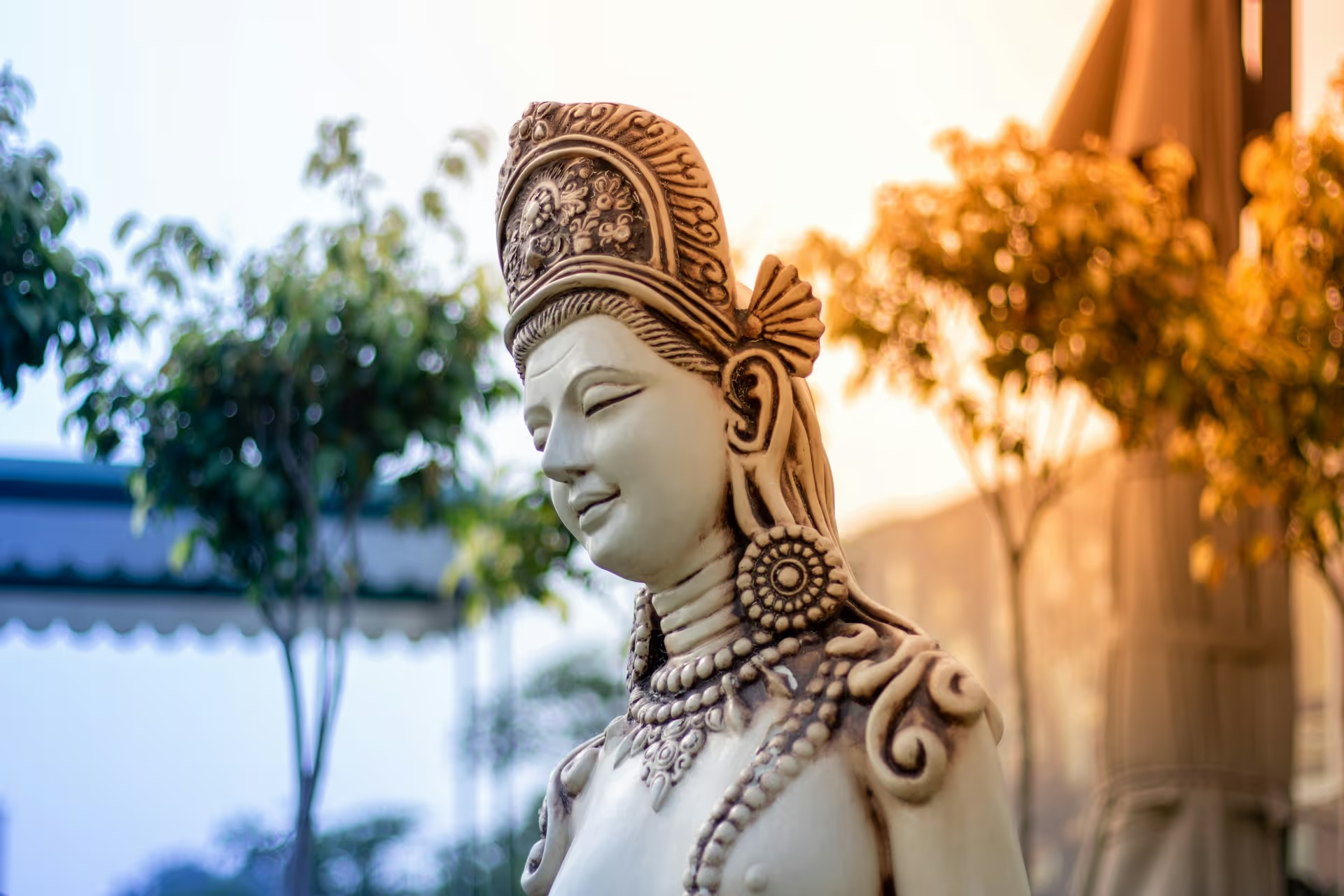
The Miraculous Play of Mañjuśrī reveals how afflictions become seeds of wisdom and liberation arises through non-dual awakening.
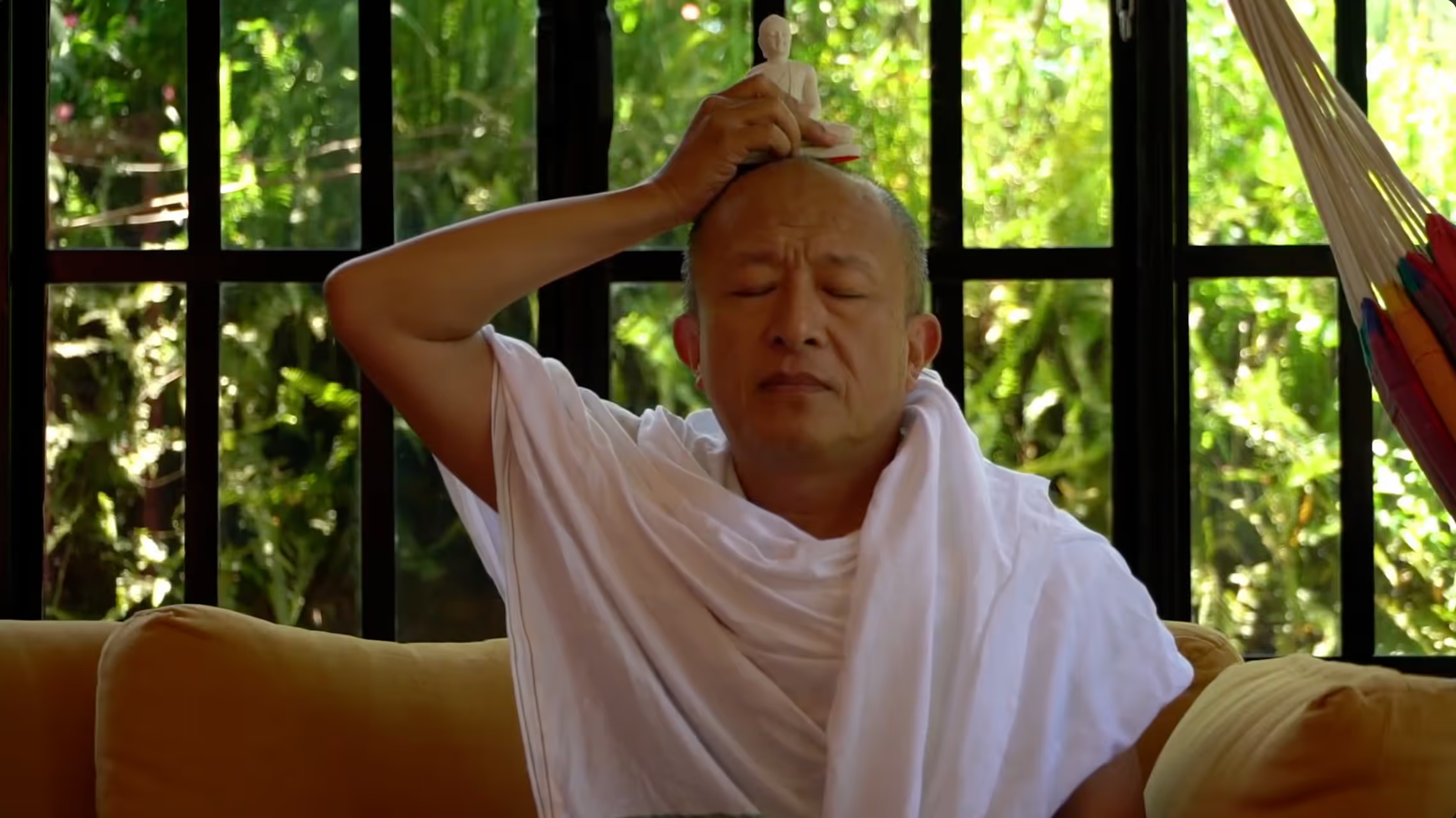
Celebrating 84000's tenth anniversary, Dzongsar Khyentse Rinpoche offers an illuminating exploration of The Miraculous Play of Mañjuśrī, demonstrating why this ancient Mahayana text speaks directly to contemporary struggles with anxiety and dualistic thinking. Rather than presenting Buddhism as an escape from the world, Rinpoche reveals how this sutra teaches awakening right where we are—through a remarkable encounter between the bodhisattva Mañjuśrī and a courtesan that challenges conventional assumptions about spirituality and liberation.
The teaching emphasizes approaching these sutras with fresh eyes, learning to perceive our struggles as dream-like play rather than solid, inescapable reality. Rinpoche demonstrates how the Buddha's wisdom offers practical tools for transcending the dissatisfaction caused by materialism and intellectual rigidity, inviting practitioners to discover freedom not by retreating to mountain caves but by transforming their relationship with everyday experience. This first session lays the foundation for understanding how Mañjuśrī's "miraculous play" reveals the liberating power of non-dual awareness in the midst of ordinary life.
Building on the foundational teachings from Part 1, Dzongsar Khyentse Rinpoche delves deeper into the heart of The Miraculous Play of Mañjuśrī, unpacking the profound dialogue between a renowned courtesan and the bodhisattva Mañjuśrī. This session explores how Mañjuśrī employs a beautiful garment as skillful means to guide the courtesan toward recognizing her own inherent enlightened nature—revealing that she herself is the essence of bodhi.
Rinpoche illuminates the text's remarkably progressive view of consciousness, showing how this ancient scripture deconstructs conventional notions of self, gender, and sensory perception through accessible metaphors. The courtesan's encounter with Mañjuśrī demonstrates the truth of non-duality: that all phenomena are illusion-like, yet simultaneously worthy of compassion. Rather than requiring the courtesan to reject her life or identity, Mañjuśrī's teaching reveals liberation within her existing experience.
This session demonstrates why these ancient teachings remain more philosophically advanced than much modern thinking—presenting a vision of reality that transcends both nihilism and materialism. Through their exchange, practitioners discover how the path of enlightenment unfolds not through escape or transformation into something else, but through recognizing what has always been present.
In this concluding session, Dzongsar Khyentse Rinpoche illuminates the most radical dimensions of The Miraculous Play of Mañjuśrī—how it challenges conventional views of suffering, morality, and spiritual practice itself. The teaching reveals that human afflictions are not obstacles to be discarded but fundamentally empty illusions that paradoxically serve as the very seeds of wisdom. Through the courtesan's story, Rinpoche demonstrates how this scripture redefines renunciation: true spiritual practice is found not in physical isolation or external rituals, but in liberating others.
This session explores one of Mahayana Buddhism's most profound insights—that even intense negative emotions can be transformed by the fire of realization when understood through the lens of non-substantiality. Rather than viewing afflictions as enemies to be conquered, the text teaches practitioners to recognize their empty nature, discovering that "the solution to human pain is found within the perceived problem itself once the nightmare of duality is transcended."
Rinpoche guides students through the essential Mahayana challenge: bridging the gap between understanding absolute emptiness and manifesting active compassion. The courtesan's transformation illustrates that enlightenment doesn't require abandoning life's complexities or emotions, but awakening to their non-dual nature. This final teaching brings together the threads from Parts 1 and 2, offering practitioners a complete vision of how ancient wisdom addresses the deepest questions of human existence—showing that freedom emerges not from escaping our experience, but from transforming our relationship to it.
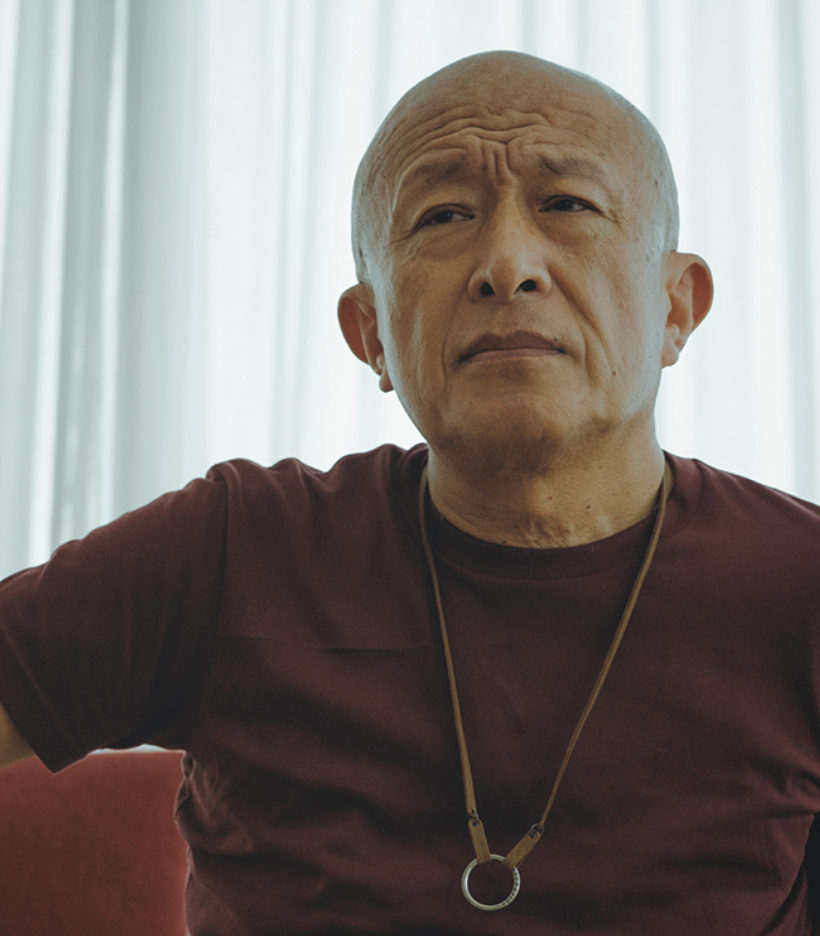
Dzongsar Khyentse Rinpoche is a student of important Tibetan Buddhist lamas including Kyabje Dilgo Khyentse Rinpoche, Kyabje Sakya Trizin, Kyabje Dudjom Rinpoche, and the 16th Karmapa.