Dzongsar Khyentse Rinpoche teaches on The Question of Maitreya, exploring Bodhichitta as the "grand vision" that enables practitioners to navigate samsara, emphasizing disciplines for abandoning attachment, avoiding non-virtuous influences, and swiftly achieving enlightenment.
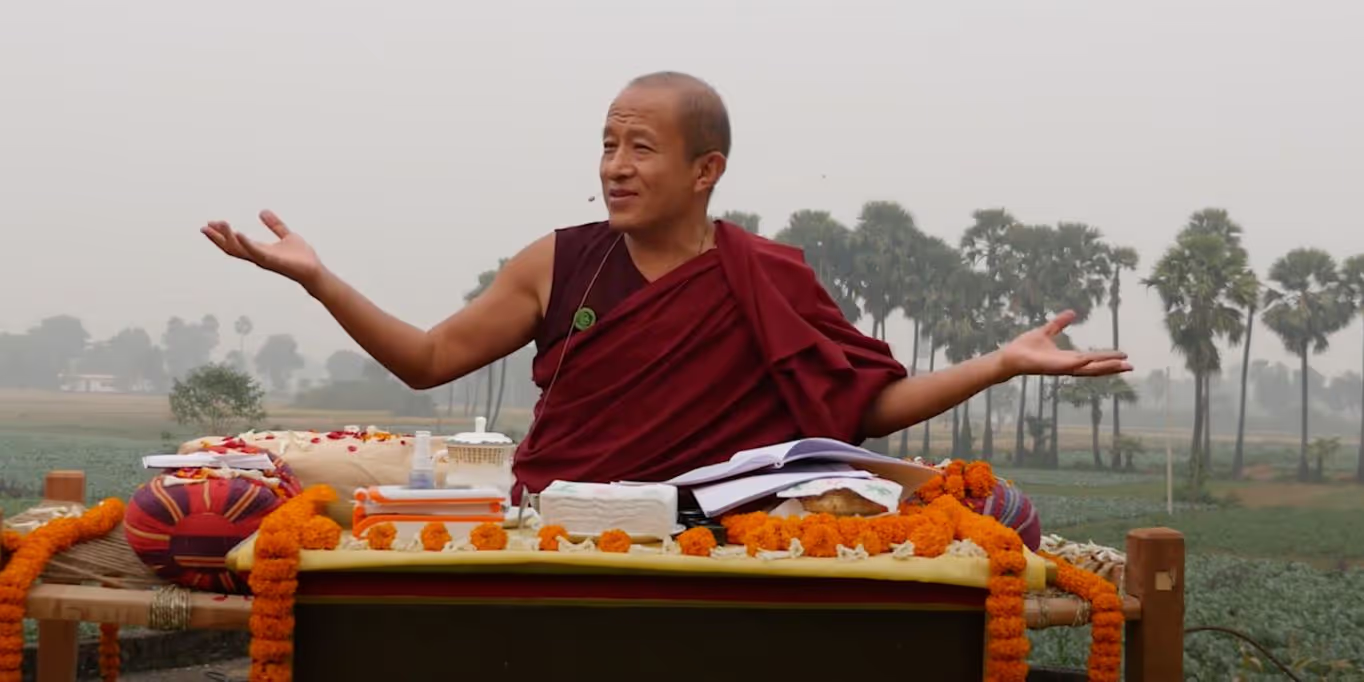
These teachings around The Question of Maitreya provide a profound exploration of the Mahayana path, emphasizing how practitioners can navigate the complexities of samsara to reach enlightenment. Across these discussions, the primary focus is a three-part inquiry posed by the bodhisattva Maitreya regarding how to abandon samsara, avoid the influence of non-virtuous friends, and swiftly achieve mahaparinirvana.
Dzongsar Khyentse Rinpoche explains that while the path can be summarized by a single attribute—the "grand vision" of Bodhichitta—the Buddha elaborates on various sets of disciplines tailored for those who require more structured guidance. Central to this teaching is the recognition that the ultimate "blessing" is the fearlessness to hear the truth of emptiness (shunyata) without shuddering, a quality Maitreya cultivated over eons.
In the first teaching, Dzongsar Khyentse Rinpoche establishes the historical and spiritual context of the sutra, beginning with a comparison between Shakyamuni Buddha and the future buddha, Maitreya. Although Maitreya took the bodhisattva vow 42 eons before Shakyamuni, he remains a bodhisattva because he chose a path of bliss, prayers, and lack of hardship, whereas Shakyamuni followed a path of radical endurance and sacrifice. He highlights a pivotal past-life encounter where Maitreya, then a Brahmin boy, received the highest blessing from an "all-illuminating" Buddha: the courage to face emptiness. When Maitreya asks how to achieve enlightenment quickly, the Buddha responds that a bodhisattva needs only one thing: Bodhichitta, defined here as a vision to enlighten all sentient beings. This vision is contrasted with the "pawn shop" mentality of ordinary people—a narrow, self-centered focus that makes one vulnerable to the "non-virtuous friends" who discourage spiritual growth.
The second teaching delves into the specific "technologies" or disciplines the Buddha provides as Maitreya’s questions are elaborated upon for "deluded beings" who require categorization. These disciplines range from pairs—such as Shamatha (non-distraction) and Vipasana (insight)—to larger sets that include compassion, understanding emptiness, and the absence of arrogance. The teaching emphasizes that samsara is not just "pain" but any state that conceals the truth, whether one is bound by an "iron chain" of suffering or a "golden chain" of virtue. Practical advice is offered on maintaining consistency in practice, finding joy in isolation (retreating from worldly involvement while remaining harmoniously present), and being "savvy" with mindfulness. The discourse concludes by stressing that a bodhisattva must be tireless, viewing all obstacles as mirages or dreams while maintaining the unwavering responsibility to benefit others.
To understand the difference between the narrow vision of samsara and the grand vision of Bodhichitta, consider a mother playing in a sandcastle with her child. While she is fully involved in the game—naming the doors and windows of the castle—she never forgets that evening is coming and she must eventually go home. She is "in" the play but not "of" it, possessing a broader perspective that prevents her from being devastated when the sandcastle inevitably collapses.
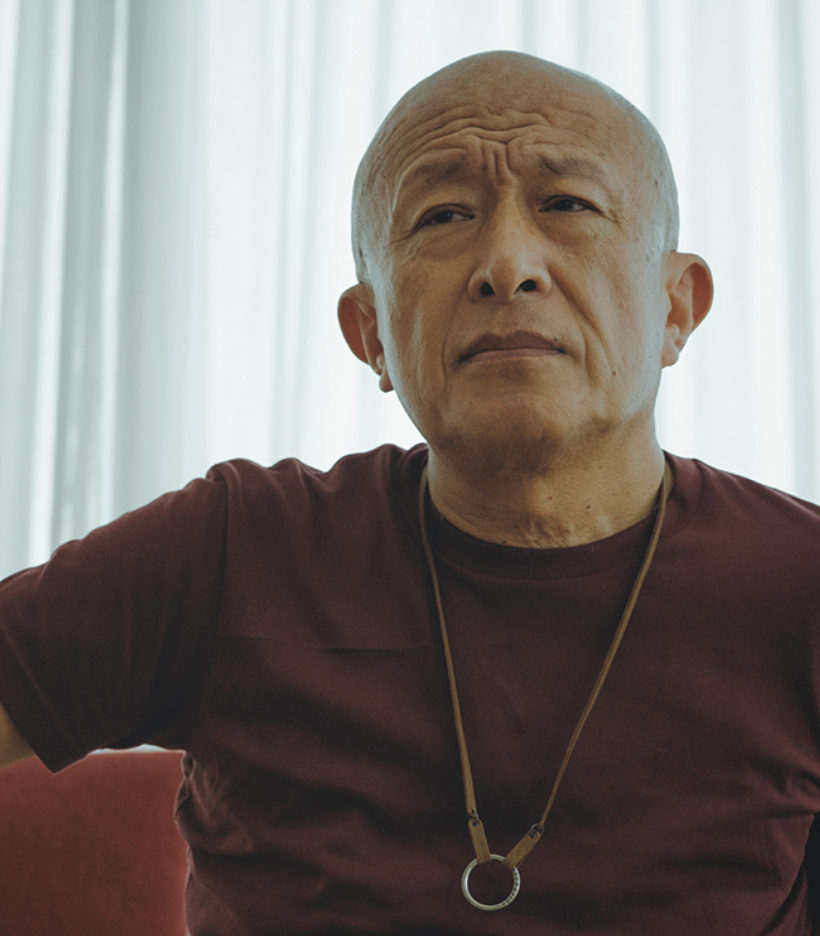
Dzongsar Khyentse Rinpoche is a student of important Tibetan Buddhist lamas including Kyabje Dilgo Khyentse Rinpoche, Kyabje Sakya Trizin, Kyabje Dudjom Rinpoche, and the 16th Karmapa.