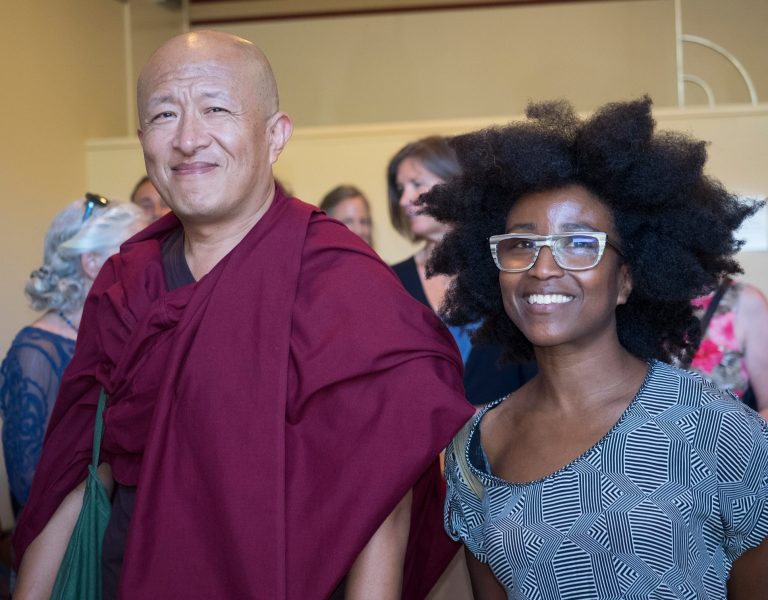
Dzongsar Khyentse Rinpoche offers practical and surprising teachings on working with the distracted mind, drawing on the full depth of the Buddhist tradition.
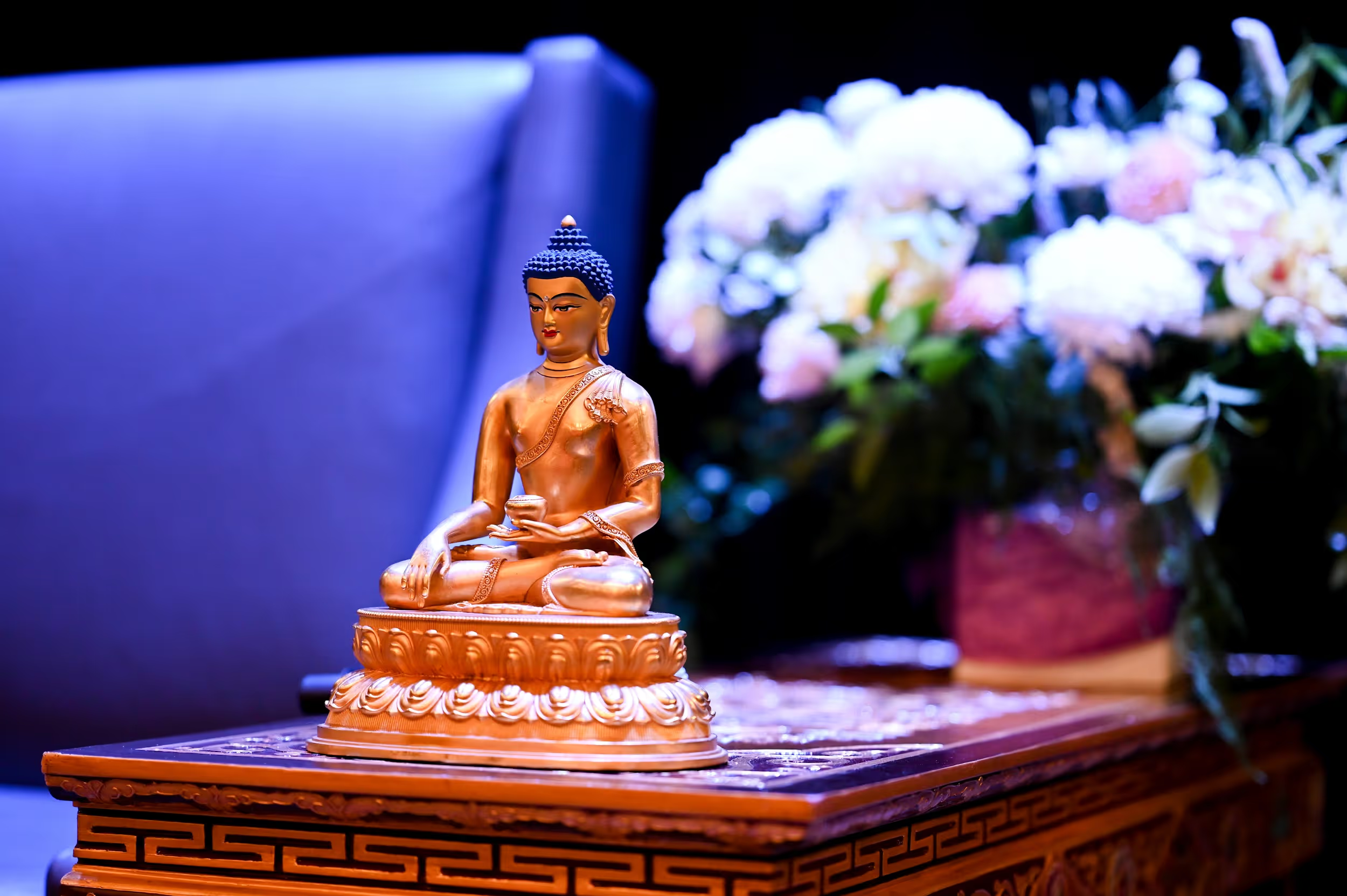
Photo by Maryna Tiutiunyk.
In this four-part teaching series, Dzongsar Khyentse Rinpoche explores one of the most universal human challenges: the restless, distracted mind. Speaking with humor, candor, and surprising practicality, Rinpoche draws on the depth of the Buddhist tradition to reframe how we relate to distraction—not as a problem to overcome through sheer willpower, but as a doorway into practice itself. From the nature of refuge and awakening to the role of desire, music, and meditation in the Buddhist path, these sessions reveal a tradition far richer and more pragmatic than common assumptions allow, offering genuine tools for anyone seeking a steadier, more awake relationship with their own mind.
In the first part of Outwitting Distractions, a four-part series, Dzongsar Khyentse Rinpoche introduces this teaching by reframing distraction, refuge, and awakening in simple and practical terms.
Speaking with humor and candor, Rinpoche reflects on the differences between faith inherited versus faith discovered, on anxiety and mental health, and on the pressures of identity and self-image in the modern world, emphasizing that Buddhadharma is not merely a system of belief or philosophy but a pragmatic way of working with the mind.
Rinpoche explains refuge as an act of awakening rather than ritual alone, and introduces bodhicitta as a direct way of outwitting distraction—showing how much of our suffering arises from deeply ingrained self-cherishing, now reinforced by culture, institutions, and technology, and how learning to cherish others begins to loosen these habits.
This session concludes with a simple sitting meditation, where distraction itself becomes the entry point to practice.
In the second part of the Outwitting Distractions series, Dzongsar Khyentse Rinpoche challenges a widespread misconception: that Buddhism has been reduced to sitting meditation and vegetarianism. This narrow image may have become Buddhism's "trademark," but Rinpoche reminds us that sitting meditation is just one of Buddhism's 'skilful means' among many. He goes on to explore the vastness of the Buddha's words and the progressive nature of the Dharma — including paths like that of Ragaraja, the 'King of Desire,' and the historical use of dance and music as legitimate forms of practice.
Rinpoche provides practical instructions on "outwitting" the mind by catching the "fish" of thoughts. He emphasizes that "outwitting" does not mean judging or correcting thoughts, but simply knowing them as they happen. The session concludes with a breakdown of the "three trainings"—Wisdom, Focusing, and Conduct—and how "knowing the fact" of our changing components leads to liberation from "unnecessary endeavors".
In the third part of the Outwitting Distractions series, Dzongsar Khyentse Rinpoche reflects on how language, habits, and self-centered thinking shape our experience of reality. Drawing from a short sūtra “Appearing Differently to All While Not Departing from Emptiness, the Essence of the True Nature of Things (Toh 128),” Rinpoche explores how the concepts and labels we rely on are often vague assumptions.
Through reflections on paranoia, modern work culture, and habitual thinking, he shows how easily we create worlds of anxiety around ourselves. Even a few minutes of meditation, he explains, can interrupt the momentum of habitual thoughts—like “confusing the force” of a train running on tracks.
The teaching concludes with a practical meditation on bodily sensations, highlighting how feeling acts as a bridge between body and mind and how simple awareness can become a powerful form of conscious living.
In the final episode of the 15th Anniversary Retreat series, Dzongsar Khyentse Rinpoche concludes by focusing on the power of isolation, the necessity of mental discipline, and the importance of aspiration. He contrasts the ancient traditions of retreat with the modern struggle to remain present, offering practical advice on how to navigate the "maddening crowd" through short, disciplined moments of stillness.
Rinpoche also touches upon the complexities of modern parenting and education, questioning why children in "sophisticated" societies often struggle with mental health issues while those in simpler, monastic environments appear more content. The session ends with a focus on dedication and aspiration, framing the day’s practice as a cause for future goodness.

Dzongsar Khyentse Rinpoche is a student of important Tibetan Buddhist lamas including Kyabje Dilgo Khyentse Rinpoche, Kyabje Sakya Trizin, Kyabje Dudjom Rinpoche, and the 16th Karmapa.